

Infant Sleep and Maternal Mental Health: A Conversation with a Certified Sleep Consultant

There’s a lot of advice out there about infant sleep.
What to do. What not to do. What “works.” What doesn’t.
For many new moms, it can quickly become one of the most overwhelming parts of early postpartum.
Not just because of the lack of sleep—but because of the pressure, the second-guessing, and the feeling that you should somehow be able to figure it out.
Sleep becomes more than just sleep.
It becomes tied to how you’re coping, how you’re functioning, and sometimes… how you’re feeling about yourself as a parent.
To offer a more grounded perspective, I spoke with an infant sleep consultant who works closely with families navigating sleep challenges in the early months.

Patti Staff is a certified sleep consultant with Sleep Baby Consulting, where she supports families in understanding their baby’s sleep and finding approaches that feel realistic and sustainable for their lives. Through her work, she helps parents make sense of what’s developmentally normal, reduce stress around sleep, and find ways to get more rest during an already demanding stage.
In this conversation, she shares insight into what’s considered normal, what tends to create the most stress for parents, and how moms can better support their own rest and wellbeing.
Topic 1: Understanding Sleep Anxiety
Why does infant sleep tend to create so much anxiety for moms specifically?
Infant sleep tends to create a lot of anxiety for moms because, quite simply, there’s very little preparation for it. When families leave the hospital, they’re not given a clear roadmap for how to approach sleep. There’s often education around childbirth and feeding, but very little guidance on how to build healthy sleep foundations in those early weeks.
As a result, many parents enter the fourth trimester already exhausted, doing their best to navigate an unfamiliar and often overwhelming experience. That level of uncertainty alone can create significant anxiety—especially for mothers, who are often the primary caregivers during this stage.
Adding to this, while there are many books and programs on sleep training, they often present a one-size-fits-all approach. When a baby doesn’t follow those expectations, parents can quickly feel like something is wrong or that they’re doing something incorrectly. In reality, infant sleep can vary widely, and differences are often completely normal.
Supporting families in understanding what’s developmentally appropriate—and helping them build a flexible, responsive foundation—can go a long way in reducing that anxiety and helping parents feel more confident in their approach.
What are the most common sleep-related concerns you hear from new parents?
One of the most common sleep-related concerns I hear from new parents is the fear of letting their baby cry. That feeling is so natural—our instincts immediately tell us that crying means something is wrong, and we want to fix it right away.
At the same time, it can be helpful to understand that not all crying is harmful. In a safe and supportive environment, brief moments of fussing or crying can actually play a role in development. It gives babies small opportunities to begin figuring out how to settle themselves and work through mild discomfort.
When we pause and take a moment to listen before responding, we’re not ignoring our child—we’re giving them space to practice an important skill while still being nearby and supportive. The goal is always a balance: meeting our child’s needs while also gently encouraging their growing ability to self-soothe over time.
Topic 2: What’s Considered “Normal” In This Stage?
What’s “normal” when it comes to newborn and early infant sleep?
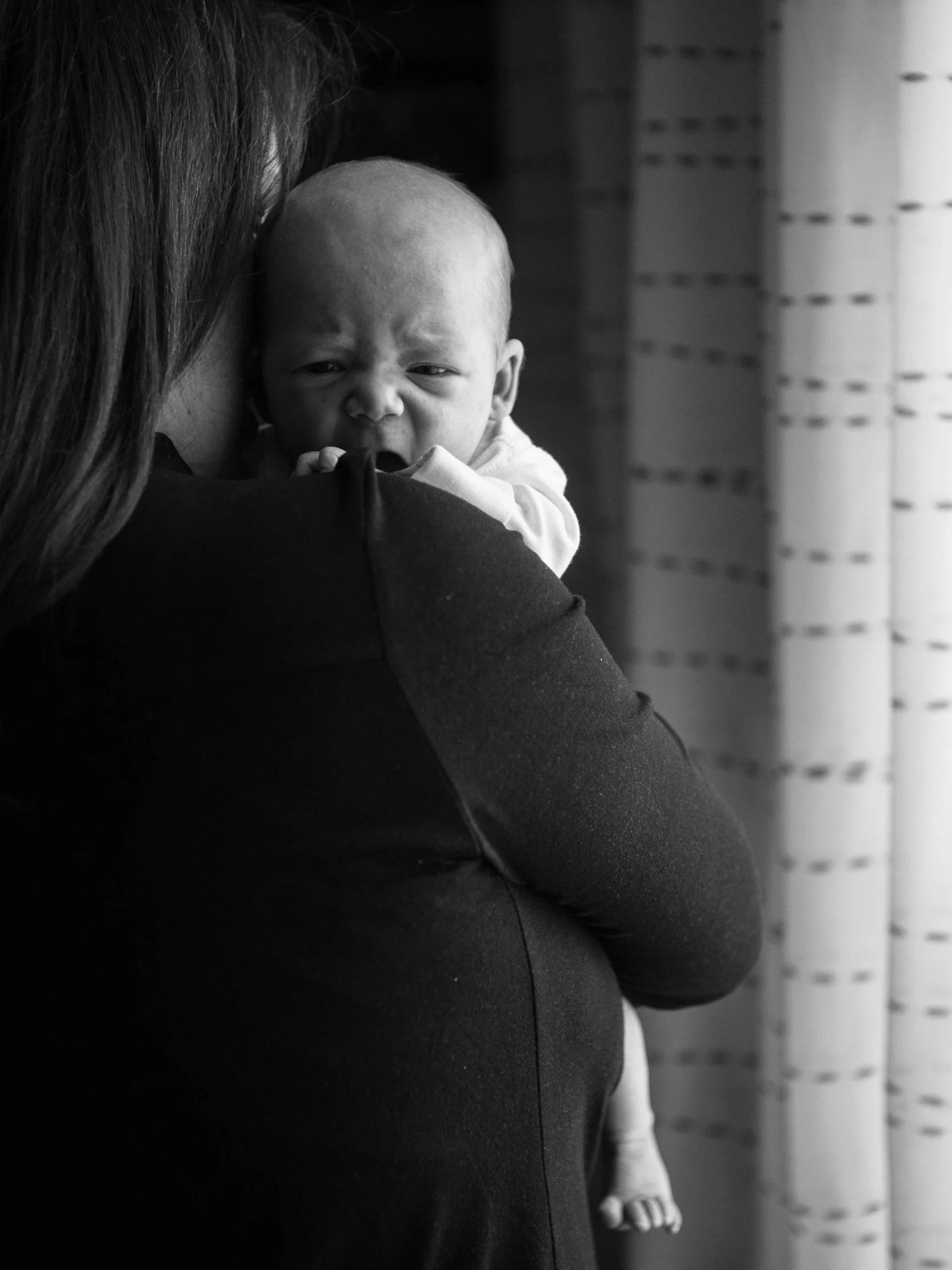
When it comes to newborn and early infant sleep, “normal” can look very different from day to day. In those early weeks, babies sleep a lot—but not on a predictable schedule. Sleep is often broken up into short stretches, and frequent waking, especially at night, is completely typical and developmentally appropriate.
It’s also important to remember that sleep can feel uncomfortable or unfamiliar for newborns at first. They’ve spent months curled up in a warm, close environment, and now they’re adjusting to a much more open world. Because of that, many babies strongly prefer to be held, rocked, or close to a caregiver while they sleep.
Snuggling, contact napping, and providing that closeness in the early weeks is not only okay—it’s often exactly what both baby and parent need. This stage is about connection, regulation, and helping your baby feel safe as they adjust.
It can also be helpful for parents to know that newborns don’t yet have a developed circadian rhythm, so day and night confusion is common. Feeding patterns, growth spurts, and developmental changes will all impact sleep, making consistency feel out of reach at times.
Rather than focusing on strict schedules early on, the goal is to learn your baby’s cues, respond to their needs, and gradually begin introducing gentle rhythms as they grow. Over time, sleep becomes more organized—but in the beginning, variability is not only normal, it’s expected.
If unpredictable sleep is normal, how can parents tell the difference between a sleep issue vs. typical development?
A helpful way for parents to distinguish between a true sleep issue and typical development is to look at both timing and duration. Developmental leaps and growth spurts tend to happen at fairly predictable windows, and while they can disrupt sleep, they are usually short-lived—often lasting just a few days to, at most, about 3–4 nights.
During these phases, you may notice temporary changes like increased night waking, shorter naps, or a baby needing more comfort than usual. While it can feel intense in the moment, these shifts are typically tied to rapid development and tend to resolve on their own.
A sleep concern, on the other hand, is more likely when a new pattern persists beyond several days—generally longer than 4–5 nights—and becomes the new norm. This might look like ongoing difficulty falling asleep, frequent night wakings that aren’t improving, or increased dependence on specific conditions that make sleep harder to sustain.
It’s also helpful to consider the bigger picture. If your baby is feeding well, growing appropriately, and generally content when awake, short-term disruptions are often developmental. However, if sleep challenges are prolonged, intensifying, or impacting the well-being of the baby or family, it may be worth taking a closer look at sleep habits, environment, or routines.
Ultimately, many sleep disruptions in infancy are a normal part of growth. Helping parents understand what is temporary versus what may need adjustment can ease anxiety and build confidence in how they respond.
Topic 3: Sleep and Maternal Mental Health
How do you see sleep challenges impacting a mother’s mental health?
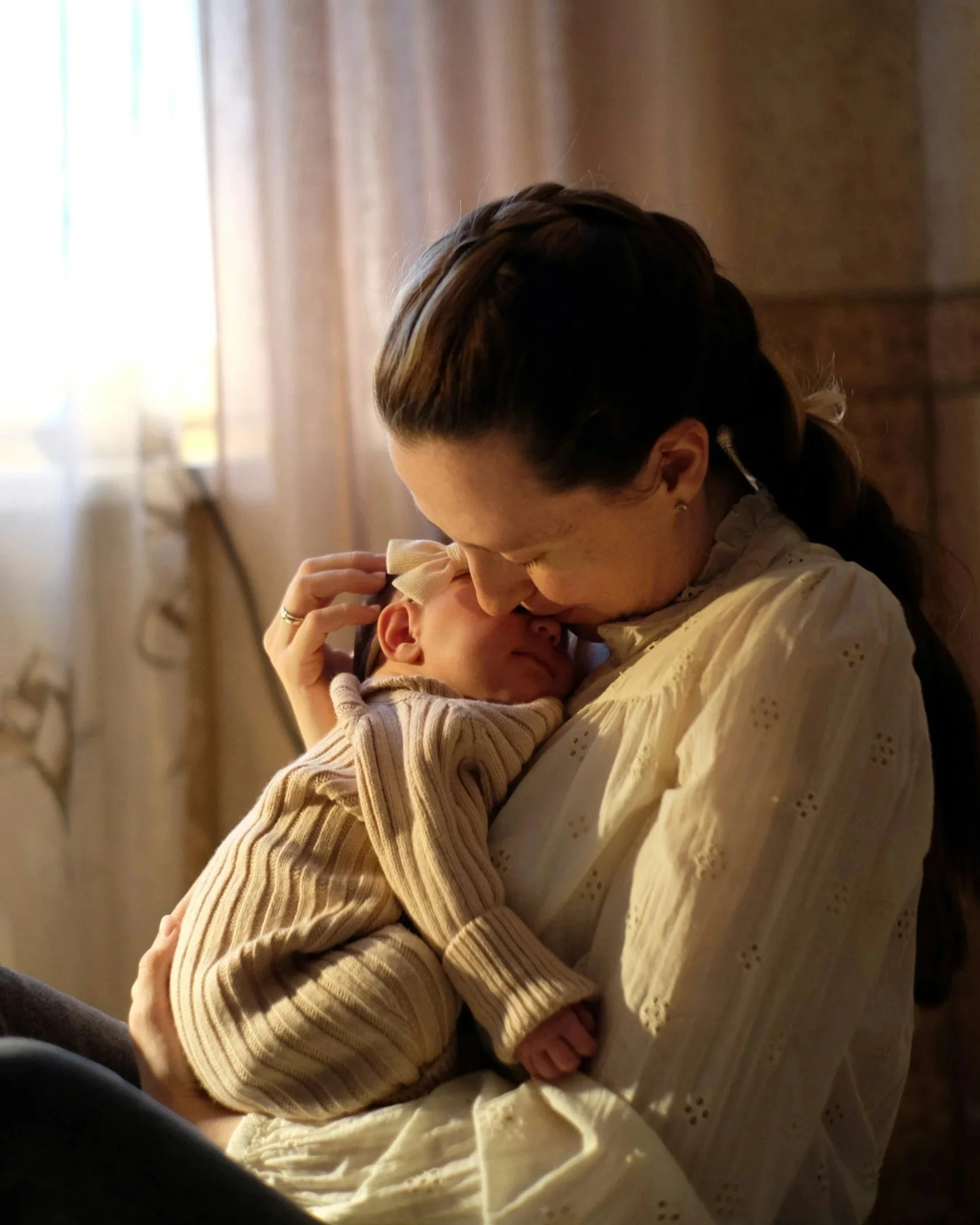
Sleep challenges can have a significant impact on a mother’s mental health because sleep is such a foundational part of overall well-being. When sleep is disrupted or inconsistent, it affects our ability to think clearly, regulate emotions, and function day to day. Even short periods of sleep deprivation can leave someone feeling overwhelmed, anxious, and depleted.
For new mothers, this impact is often intensified. They are not only learning to care for a brand-new baby, but also adjusting to their own physical recovery and a body that has undergone major hormonal shifts almost overnight. These changes can heighten emotional sensitivity, making it harder to cope with the normal stresses of early parenthood.
Ongoing sleep challenges can also contribute to increased feelings of anxiety, irritability, and self-doubt. When a baby isn’t sleeping well, many mothers internalize that struggle, questioning whether they’re doing something wrong. Over time, this can affect confidence and overall mental health.
There’s also an element of isolation that can come with infant sleep struggles. Nights can feel especially long and lonely, and the cumulative exhaustion can make it harder to reach out for support or feel like yourself.
Because of all of this, supporting healthy sleep—both for baby and for mom—is not just about rest, it’s about protecting mental and emotional health during a very vulnerable and transformative season.
What are some realistic ways new moms can get more rest, even when sleep is broken?
Getting rest with a newborn can feel challenging, especially when sleep is naturally broken, but there are realistic ways to make it more manageable. The well-known advice to “sleep when the baby sleeps” can be helpful—especially in the early weeks—but it’s not always practical for every nap. Even short periods of rest, though, can make a meaningful difference.
One of the most important strategies is learning to advocate for yourself. Communicating clearly with a partner or support person about when you need rest—and being specific about how they can help—can create opportunities for longer, more restorative stretches of sleep.
It can also help to think in terms of shared responsibility. For example, taking shifts at night, or having someone else handle a feeding (if possible), can allow for a longer uninterrupted stretch. Accepting help from trusted family or friends during the day—whether that’s holding the baby while you nap or helping with meals and household tasks—can also free up time for rest.
Letting go of nonessential tasks during this season is another important piece. Prioritizing rest over things like chores or productivity can be a necessary and healthy adjustment. Even small moments of rest—lying down, closing your eyes, or simply sitting without stimulation—can help your body recharge.
Ultimately, rest in this stage may not look perfect or consistent, but being intentional about creating opportunities for it can make a significant difference in how a new mom feels and functions.
Topic 4: Supporting Better Rest For Baby and Mom
Are there any small changes that tend to make a big difference?
Yes—there are often small, consistent changes that can make a surprisingly big difference in newborn sleep, especially when they’re applied gently and consistently over time.
Simple things like making sure your baby is getting full, effective feedings during the day can help reduce unnecessary night waking. Paying attention to age-appropriate wake windows can also help prevent overtiredness, which is one of the most common reasons sleep becomes more difficult.
Another helpful piece is beginning to introduce gentle sleep cues and consistency—helping your baby understand when it’s time to sleep through predictable patterns like dimming lights, a short routine, or a consistent wind-down sequence. Starting the day at a fairly consistent time each morning can also help regulate their developing circadian rhythm, which lays an important foundation for more predictable sleep over time.
In addition, focusing on daytime exposure to natural light and age-appropriate active wake periods can help reinforce day/night differentiation. On the flip side, keeping nighttime interactions calm, quiet, and low stimulation supports the message that night is for rest.
It’s also worth remembering that environment matters—a safe, dark, and calm sleep space can significantly support better sleep quality.
And what’s great is that these are all small things you can begin implementing from day one. They don’t require sleep training or rigid structure, but instead create gentle foundations that support your baby’s natural development from the very beginning.
Ultimately, these small shifts aren’t about creating “perfect sleep,” but about gently guiding your baby toward a rhythm that supports both development and rest for the whole family.

How can partners and support systems help protect mom’s sleep?
One of the most impactful ways partners and support systems can help protect a mom’s sleep is by taking initiative. Rather than asking, “What can I do?”—which can unintentionally place more mental load on her—look around and step in where help is clearly needed. If dinner is approaching, take ownership of it. If laundry is piling up, start a load. If dishes are in the sink, handle them. Supporting a new mom often means anticipating needs instead of waiting to be directed.
It’s also important to recognize that she may not be able to function in the same way she did before. Giving her the space to rest without expecting her to maintain previous routines can make a significant difference in both her physical recovery and mental well-being.
Protecting sleep can also look like creating intentional opportunities for uninterrupted rest—whether that’s taking over with the baby for a stretch, encouraging her to nap, or ensuring she has time to recharge without interruption.
Equally important is encouraging her to take time for herself. Even something as simple as a quiet, uninterrupted shower can help reset an overstimulated nervous system. Supporting her in stepping away—whether for a walk, time with friends, or a break outside the home—can help her return feeling more like herself.
Ultimately, the goal is to create an environment where she feels supported, seen, and not solely responsible for carrying the physical and mental load during this season.
A Reassuring Perspective
What would you say to a mom who feels like she’s “doing sleep wrong”?
I would tell her that there is no single “right” or “wrong” way to approach sleep. Every baby is different, and every family dynamic is different, which means what works for one family may not work for another—and that’s okay.
The only true concern is when a baby’s health or safety is at risk. Outside of that, there is a wide range of normal when it comes to infant sleep, even if it doesn’t always look like what we expect or read about.
It’s also worth acknowledging how comparison between children can really impact how parents feel. So often, we hear about the “wins”—babies who are sleeping through the night or families who feel like they’ve figured it out. What we don’t hear as often are the nights that are still really hard. Because of that, many parents quietly assume that if their baby isn’t sleeping well, something must be wrong or that they’re the only ones struggling.
In reality, many families are navigating similar challenges—they’re just not always talking about them. That silence can make normal sleep variability feel like failure, when it’s often just part of development and individual temperament.
If your baby is safe, loved, and growing, and you are doing your best to respond in a way that feels sustainable, you are not doing it wrong. Parenting—especially in the early stages—is a process of learning, adjusting, and finding what works for your unique family over time.
And with that, I’d like to extend a heartfelt thank you to Patti Staff, for offering her time, knowledge, and thoughtful perspectives. The insight she’s offered here reflects not only her expertise, but also a deep understanding of what parents are navigating during this stage. For new and expecting moms, having this kind of grounded, realistic information can make a meaningful difference.
Thank you, Patti!
If you are interested in working with Patti for support around your baby’s sleep, you can learn more about her services through the Sleep Baby Consulting website, or by contacting her at patti@sleepbabyconsulting.com.
Key Takeaways:
Infant sleep can vary widely—and much of what feels concerning is often developmentally normal
Sleep challenges don’t just affect rest—they can significantly impact a mother’s mental and emotional wellbeing
Anxiety around sleep is common, especially when expectations don’t match reality
Small, consistent changes can make a meaningful difference over time
Support from partners and others plays an important role in protecting a mother’s rest
There is no one “right” way to approach sleep—finding what works for your baby and your family matters most
If infant sleep feels more overwhelming than you expected, you’re not alone.
This stage can be challenging in ways that aren’t always talked about—and much of what feels uncertain is also completely normal.
Over time, finding what works for your baby and your family becomes clearer. But if the stress, anxiety, or exhaustion starts to feel like too much to carry on your own, support is available—you don’t have to figure it all out by yourself.